
One Summer, He Used AI to Sift 1.5 Million Stars for NASA — What Is a Teenager's Summer Really Worth?
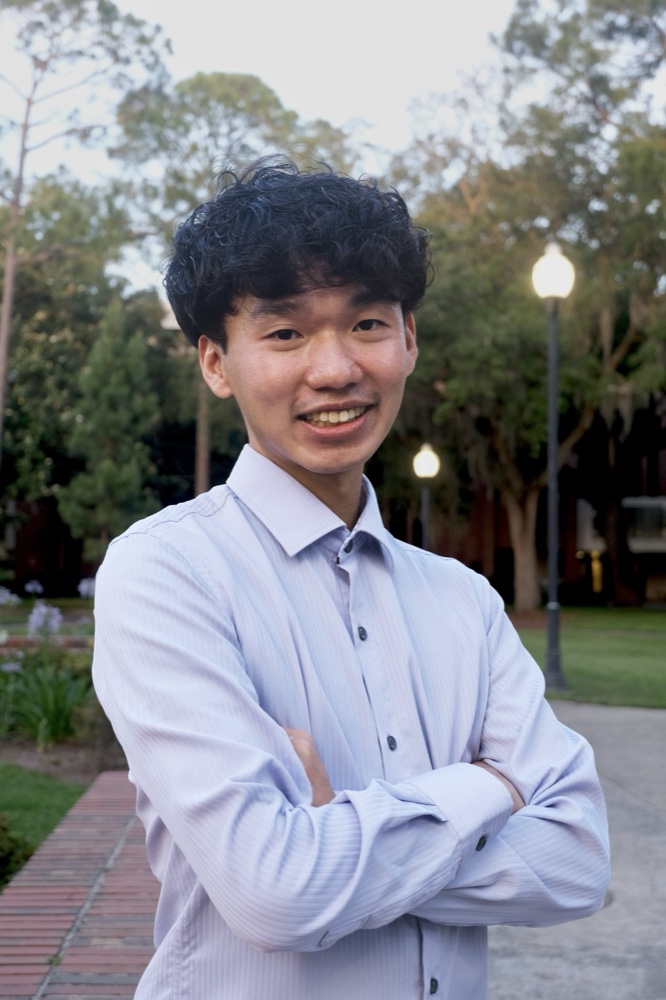

Editor's note: The story and inspiration here come from a piece shared by the WeChat account "甜蜜Susan (朵朵花开了)" and from public reporting on Matteo Paz. Adapted and expanded by World Science Academy; the commentary is our own.
Every summer, the same anxiety bubbles up in parent chats: two months off — how on earth should we fill them?
Some parents pack the calendar to the minute — math tutoring, AP prep, TOEFL, competition camps, summer schools back to back. Others let go entirely: sleep till noon, scroll until 2am. Then a story about one American high-schooler made a lot of parents quietly put their cram-school schedules down.
A "warm-up assignment" that ended up turning heads across astronomy
His name is Matteo Paz, a student at an ordinary high school in Pasadena, California. Last summer he joined a research program at the California Institute of Technology (Caltech).
His mentor's task was modest. NASA has a retired infrared telescope, NEOWISE, that scanned the sky for a decade and left behind nearly 200 billion observations — full of objects whose brightness changes over time. The mentor simply wanted him to start with a small slice of the data, hand-pick a few variable stars, and get a feel for the research process.
But Matteo didn't follow the script. He stared at the database for a while and asked one question: "Why do this by hand — why not let AI find them?"
Instead of combing the data row by row, he sat down and wrote code, weaving signal processing and machine learning into an AI model he called VARnet — then pointed it at the entire NASA database. On an ordinary graphics card, it analyzed each object in just 53 microseconds (a single blink of your eye is about 300,000 microseconds). In the end it flagged roughly 1.5 million candidate variable stars (still to be verified by astronomers).
The work was later published in the leading journal The Astronomical Journal — with a single name in the author line. On the strength of it, he won the Regeneron Science Talent Search, one of the most prestigious high-school research competitions in the US, and its $250,000 top prize; Caltech offered him a paid position before he'd even finished high school.
Before you call him a prodigy, look at how he spent his summer
I don't want to write this as another "look at that amazing kid" story. There are really three things worth taking away.
First, he was working on a real problem. Many US university summer research programs are built on one idea: the mentor hands you a problem, not an answer, and you figure out the rest. That's far harder than memorizing a fact — the real world simply has no answer key.
Second, he used AI like a colleague. Plenty of high-schoolers can use ChatGPT now. What set him apart is that he handed the repetitive grind to AI and spent his own time on the parts AI can't do — designing the approach, checking the results, improving the model. In the age of AI, the people who matter are the ones who can ask a good question, set a direction, and tell whether an answer is any good.
Third, admissions officers increasingly want to see something real. A paper, a project, a prototype that actually runs — those can't be faked or packaged. What they're really after is whether a child can solve problems; the length of an activities list matters far less.
So how should your child spend the summer?
Honestly, the real waste of a summer usually isn't the time spent having fun. It's spending two months ticking boxes on someone else's list — math in the morning, English in the afternoon, physics at night — busy as a clock-punching job, with nothing of their own to show at the end.
Foundations matter, of course. But summer is a rare stretch of six to eight weeks to sink into one real thing and make something your own: a program, a study, a small website, a model. That kind of evidence beats "worked hard this summer" a hundred times over when it comes to college and internship applications.
This is exactly what we do
At World Science Academy, we don't do the project for the student — we help them turn a real question into a rigorous piece of research: from framing a testable question and working with real data, to writing it up like a real researcher, building a poster, and presenting it at fairs like ISEF and the Regeneron STS.
Our topics come from the real world — applied AI, agriculture and plant science, energy and sustainability, microbiology and life science, and AI systems — mentored by someone who has done real research and sat at the judging table, alongside an AI product designer.
Not every child will find 1.5 million stars. But every child can, in a single summer, connect their interests and abilities to a real problem for the first time — and that may be the most valuable thing a summer can give.
Want your child to build something real this summer? We offer a free consultation to help plan a research project that's truly their own.
👉 Learn more: worldscienceacademy.org
Enjoyed this? Get it in your inbox
New articles as they publish, plus science-fair and admissions updates.
After submitting, click the button in the confirmation email to finish subscribing (check your spam folder if it doesn't arrive).
Want your child to build a real research project? Book a free consultation.
Book a free consultation →